If you manage physical locations, you already know the blind spot. Digital teams see clicks, bounce rates, funnels, and conversion paths. On-site teams often rely on door counters, manual headcounts, or just gut feel. As locations grow and staffing gets tighter, those gaps show up fast. Lines form in the wrong places. High-value areas sit […]

Switching becomes “real” the moment a network grows past a single closet. New VLANs appear. VoIP and cameras compete for PoE. A warehouse adds handheld scanners. A campus adds more IDF closets. Then the trouble starts: inconsistent port settings, trunks that allow everything, uplinks that run hot, and a support team that spends more time […]
Compliance audits rarely fail because a team lacks effort. They fail because evidence lives in too many places. A growing environment adds more sites, more administrators, more device types, plus more ways for standards to drift. A firewall rule gets updated in one branch and forgotten in another. A “temporary” SSID becomes permanent. A switch […]
Adding locations often starts as a business win and quickly becomes an operations test. A new branch opens with a tight deadline. A warehouse adds scanners, cameras, and voice endpoints. Remote work becomes permanent. Then the network team inherits hundreds of small differences. Naming drifts. Policies vary from site to site. The help desk sees […]
As organizations scale across regions, network complexity tends to rise faster than operational maturity. New offices come online under tight timelines. Warehouses deploy scanners, cameras, and industrial devices. Campuses grow organically as departments request more coverage, more switches, and more segmentation. Without a deliberate organizational model, these additions lead to inconsistent naming, duplicated configurations, uneven […]
GDPR work rarely stays inside a legal folder. It shows up in day-to-day network operations, especially in environments that track users, devices, locations, and access events. Wi-Fi sign-ins, directory authentication, client analytics, camera footage workflows, and security logs can all touch personal data. That is why GDPR in cyber security is not an abstract topic […]
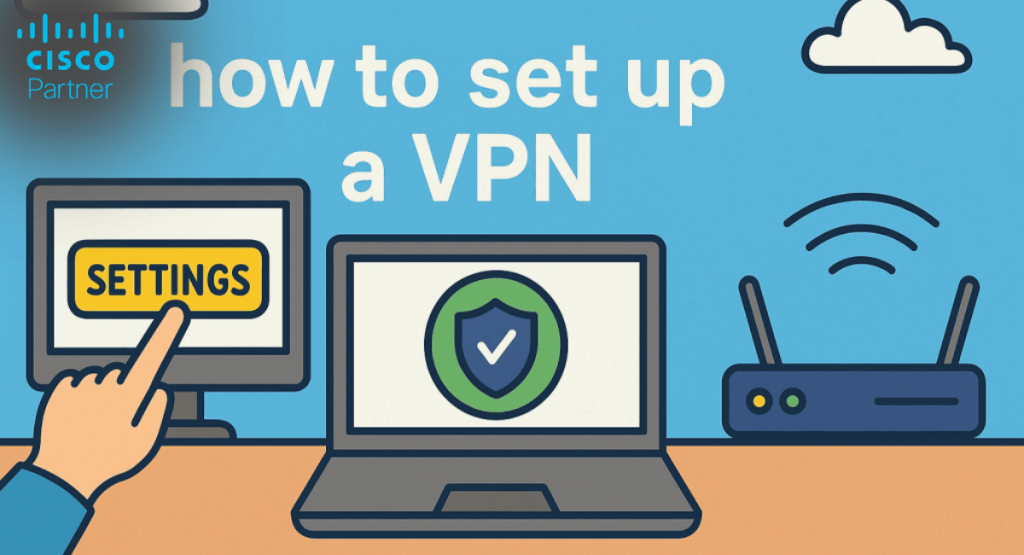
A site-to-site VPN creates an encrypted path between locations so traffic can move privately across the internet. A gateway device, such as a Meraki MX, manages the VPN connection between offices, ensuring secure and reliable communication. Teams rely on it for branch access to shared services, inter-office application traffic, centralized logging, and predictable routing between […]
High-density wireless environments break the rules that work in small offices. Signal strength can look great, yet users still complain about sluggish apps, unstable calls, or constant reconnects. The reason is simple. In dense spaces, the radio becomes the bottleneck, not the internet circuit. Dozens or hundreds of clients compete for airtime, management frames fill […]
A short internet outage can feel like a minor inconvenience until it hits during peak hours. Card transactions stop. VoIP calls drop. Teams lose access to cloud apps and shared files. If customers rely on chat, booking, or support portals, revenue takes the hit fast. Most organizations now measure uptime against tighter internal targets and […]
Global enterprises increasingly host workloads across public cloud platforms such as AWS and Azure. In this environment, where applications, data, and users may span regions and continents, network architecture must handle high throughput, enforce security, and integrate with cloud resources seamlessly. Traditional hardware‑based VPN hubs or edge appliances often struggle with scalability, agility, or performance. […]