
Last week, I spent two days at Cisco’s Chicago Spark event with Chris Graves from our team. We attended sessions, networked in hallways, and dressed up for the evening “Net Gala.”
Here’s what I realized: The most valuable part wasn’t the formal presentations.
It was the conversations.
When you’re standing next to a Cisco Mid-Market leader at a gala, you learn things that don’t make it into press releases. You understand priorities. You see where the company is actually investing versus where they’re just maintaining legacy products.
This kind of relationship changes how you serve clients.
The difference between transactional and strategic vendor relationships:
A transactional relationship looks like this:
A strategic relationship looks like this:
At Stratus, we’ve invested heavily in the second kind.
Our team includes ex-Cisco engineers who understand how Cisco thinks. But that’s not enough. You also need personal relationships with Cisco’s current leadership who can actually influence decisions.
That’s what events like Spark provide.
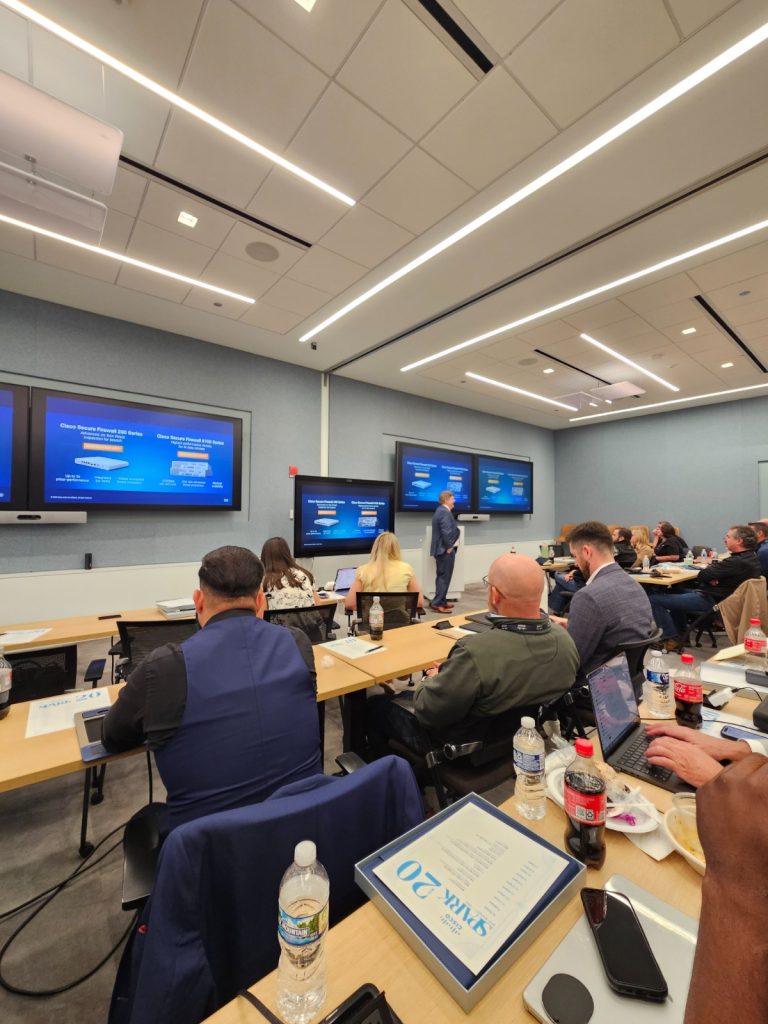
The real conversations happen outside the conference room.
In formal presentations, Cisco talks about product roadmaps, innovation, and market strategy.
In hallway conversations, you learn:
For example, at this Spark event, we learned:
These aren’t things you read in a press release.
They shape how we advise clients.
When you understand what’s actually coming, you give better advice.
Example: A client asks about switching platforms.
Without direct Cisco relationships, you might say: “Let’s look at what features you need.”
With direct Cisco relationships, you say: “Let’s look at your timeline. Here’s where Cisco is investing engineering resources. Here’s what’s coming in the next 18 months. Here’s how that impacts your decision today.”
That’s the difference between selling equipment and being a strategic partner.
At Stratus, we’ve built this advantage in several ways:
If you’re evaluating network partners, ask about their vendor relationships.
Not in a “do you know people” way. In a “how close are you to understanding the vendor’s direction” way.
Good questions to ask:
The answers separate vendors who are reselling products from partners who are actually strategic.

Here’s what having these relationships actually delivers:
✓ Better recommendations – We understand what’s coming and can advise accordingly
✓ Faster escalation – When something urgent happens, we have a contact who can help
✓ Supply chain navigation – We work directly with Cisco on availability and can often find solutions when others can’t
✓ Product selection – We know which products are getting investment and which are being phased out
✓ Compliance and support – We understand Cisco’s support strategy and can help clients navigate licensing and warranty properly
✓ Innovation planning – We can help clients plan upgrades around what’s actually coming
These aren’t luxuries. They’re the difference between a network that barely works and a network that drives business value.
The networking doesn’t stop after the event.
Events like Spark are opportunities to deepen relationships that started earlier and will continue later.
The conversations we had in Chicago will inform how we advise clients over the next 18 months.
If you’re serious about your network infrastructure, work with partners who are serious about their vendor relationships.
Not vendors. Partners.
There’s a difference.
Schedule a free consultation. We’ll tell you what we learned and how it applies to your situation.
Free Network Assessment
stratusinfosystems.com/contact