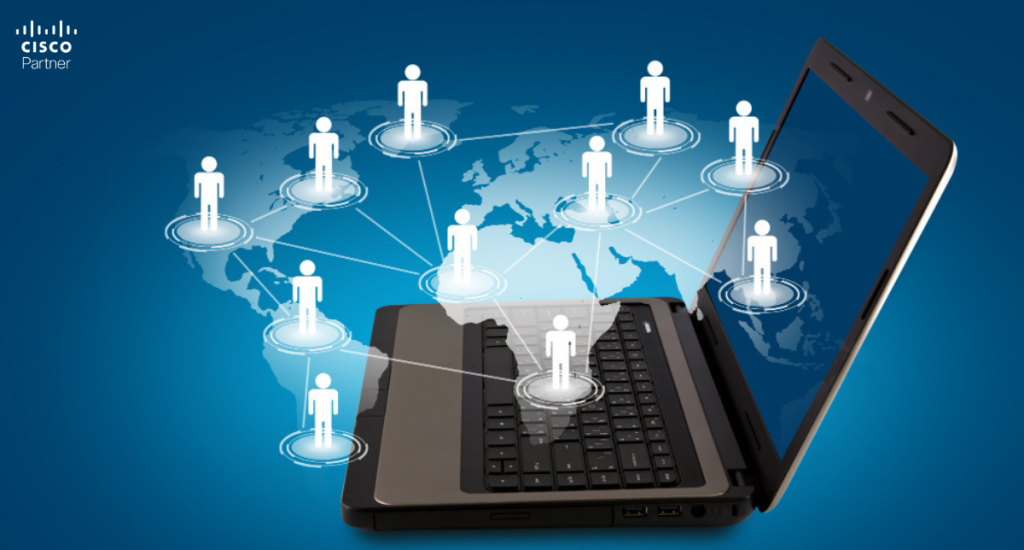
Cloud network management moves the management plane into a cloud-hosted platform so the network can be configured, monitored, and maintained from a central interface instead of relying only on controllers or management servers kept on site. The traffic path and the management path are separate in this model. Day-to-day administration, alerting, policy changes, reporting, and visibility are centralized, while production traffic continues to move through the local network and its WAN links.
That distinction is what makes the model useful. A business with several locations, a lean IT team, or heavy dependence on wireless and branch connectivity can manage more of the environment without being physically present at every site. A team can review device health, push configuration changes, check alerts, and compare conditions across locations from one management plane. In the right environment, that shortens troubleshooting, reduces operational overhead, and improves consistency from one site to the next.
Traditional network management usually depends on tools, controllers, or management servers maintained inside the organization’s own environment. Cloud network management shifts that operational layer to a vendor-hosted platform. The network team uses a web-based dashboard or cloud console to monitor, configure, manage policies, generate reports, and receive alerts. The result is a different operating model, not just a different login screen.
The practical change shows up in daily work. A switch port change at a branch office does not require someone to be in that office. A wireless issue can be reviewed against organization-wide data. Firmware planning, alert settings, network templates, and configuration state can be handled centrally. That is why cloud-managed networking tends to appeal to businesses with multiple locations, fast-moving operations, and limited time for local administration.
This does not mean every part of network operations becomes effortless. The cloud platform improves reach, visibility, and coordination. It does not replace sound design, access control, documentation, or change discipline. A poorly organized network can remain poorly organized even when it is easier to see. The management model becomes more powerful, but it still depends on clean standards and clear ownership.
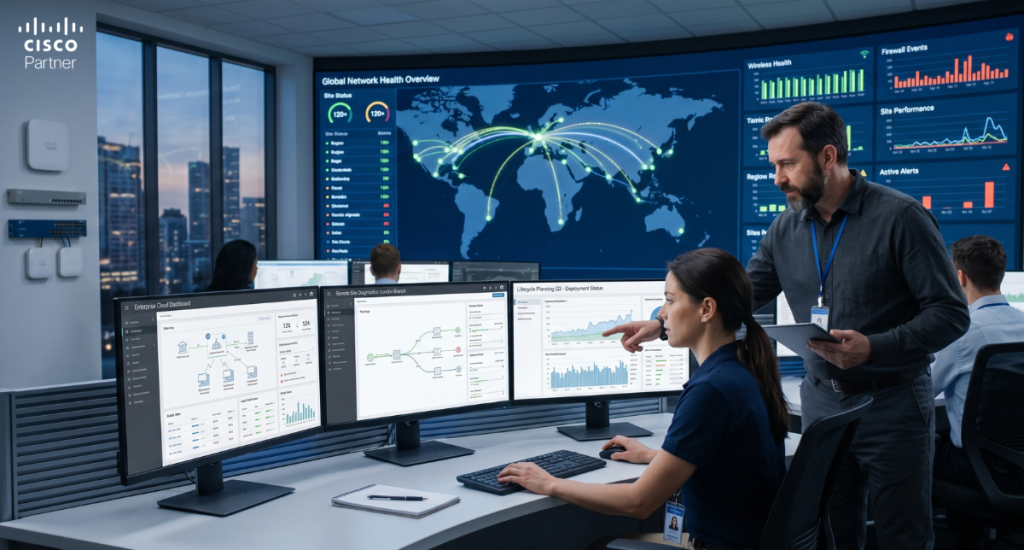
A useful way to look at cloud-based network management is to separate the control functions from the forwarding functions.
| Function | Usually Centralized in the Cloud | Usually Stays With the Local Network |
| Device configuration | Yes | No |
| Policy and template management | Yes | No |
| Alerting and notifications | Yes | No |
| Monitoring dashboards and reporting | Yes | No |
| Firmware scheduling | Yes | No |
| User and admin access to the management plane | Yes | No |
| Production traffic forwarding | No | Yes |
| Local switching and wireless data traffic | No | Yes |
| Internet and WAN transport | No | Yes |
| On-site cabling, power, and hardware dependencies | No | Yes |
This split is important because it clears up one of the most common misconceptions. Cloud network management does not mean that every packet takes a detour through the cloud vendor’s platform. In most cloud-managed models, the cloud service handles management, orchestration, visibility, and policy distribution, while user traffic continues to travel through the production network itself.
That architecture is one of the reasons cloud-managed platforms scale well across branches and distributed offices. The network can gain centralized operational control without forcing the business to redesign traffic flow around a management platform. This balance between local forwarding and centralized control is a major part of what makes the model attractive in enterprise and midmarket environments.
The clearest gains tend to show up in distributed environments. A company with several offices, remote users, wireless-heavy operations, or a growing branch footprint usually gets more value from a centralized management plane than a single-site business with a small static network. The more locations there are to monitor and maintain, the more costly it becomes to rely on local-only operations.
Visibility is another major advantage. Cloud platforms can provide a broader operational view across switching, wireless, and security appliances, which helps teams compare sites, review alerts, and spot patterns faster. That supports faster fault isolation and more consistent standards. A recurring wireless problem on one floor or one branch is easier to investigate when the same dashboard can show AP health, client behavior, alert history, and configuration state across the wider environment.
This is also where wireless network management improves. Dense wireless environments create a constant flow of performance questions around coverage, roaming, congestion, and client behavior. A centralized cloud view can help the support team compare conditions across locations and identify changes that deserve closer RF analysis or a site-specific fix. For organizations that already depend on wireless for daily operations, this can make the network much easier to run.
Cloud management brings convenience, but convenience is not the same thing as readiness. A business still needs sound network design, stable WAN connectivity, documented ownership, and a clear change process. If the environment has years of undocumented exceptions, inconsistent naming, weak access control, or poor segmentation, a cloud platform will expose those problems faster than an older model. It will not solve them automatically.
Access control deserves special attention. A cloud-hosted management plane can make administration easier from anywhere, which makes role definition and authentication discipline more important, not less. Administrative access, policy changes, firmware scheduling, and configuration edits should follow a controlled process. The network becomes easier to manage remotely, so mistakes can spread more quickly if governance is weak.
Connectivity dependencies matter too. The management plane may be cloud-based, but local devices, power, uplinks, and physical infrastructure still determine how well the network performs on site. A cloud-managed model gives the team stronger visibility into those problems. It does not remove the need for resilient local design and proper field support.
Cisco Meraki is one of the clearest examples of cloud-managed networking in practice. The Meraki Dashboard centralizes configuration, monitoring, alerts, reporting, and organization-wide visibility across supported devices. Cisco also continues to extend Meraki cloud management into more of its enterprise switching portfolio, including IOS XE-based switches managed through the same dashboard experience.
That model works well for businesses that value centralized control across multiple sites or a mix of switching, wireless, and security appliances. Alerting can be configured centrally, device health can be reviewed across the estate, and administrators can work from one operating view rather than piecing together data from separate local tools. For businesses that already run a distributed network or expect to grow into one, this can simplify both daily administration and long-term standardization.
Meraki is not the whole category, though. The broader principle is the important part. A cloud-hosted management plane makes the most sense when the network needs centralized visibility, remote administration, and operational consistency across more than one location or more than one infrastructure layer.

One reason businesses move toward cloud network management is staffing efficiency. A lean internal team can manage more of the environment centrally instead of traveling to sites or depending on ad hoc remote access to separate local tools. That can reduce time spent on repetitive administrative work and make escalation easier when multiple sites share the same standards and management plane.
This does not reduce the need for network expertise. It changes where that expertise is applied. Time that used to go into local administration can shift toward policy, design cleanup, lifecycle planning, alert tuning, documentation, and change control. In businesses that use managed network services or co-managed support, a cloud platform can also make collaboration easier because both internal staff and outside engineers can work from a shared view of the network.
That is one reason cloud-managed environments often fit well with network management services. The support team can review alerts, compare site health, and respond more consistently when the environment is standardized. A stronger operating model usually follows from that visibility, provided the network has been designed and documented clearly enough for the platform to be used well.
The best fit usually appears when several conditions are true at once:
A weaker fit usually appears in small static environments with limited change, low operational pressure, and little need for centralized cross-site visibility. In those cases, the management model may not need to change yet. The platform’s strengths become more valuable as the network becomes more distributed, more dynamic, or more dependent on remote operations.
For businesses reviewing that shift now, the most useful starting point is a practical network review. Current visibility, alerting, site standardization, wireless demands, change volume, and staffing depth usually reveal quickly if the network is ready for a cloud-managed operating model. Stratus can help with that review, so contact us.