The Cisco Meraki CW917 series marks a significant advancement in enterprise wireless networking. The CW917 series represents the next generation wireless networking for enterprises, delivering future-proof technology and high-performance capabilities. As businesses shift toward Wi-Fi 7 for faster speeds, lower latency, and greater device density, Meraki’s new access points—CW9178I and CW9176I—are designed to meet the demand for scalable, high-performance wireless environments.
Choosing the right access point can directly impact user experience, security, and operational efficiency. Both models support Meraki’s signature cloud managed platform, but they are built for slightly different deployment needs. In this article, we offer a thorough comparison between the CW9178I and CW9176I. We are here to help IT professionals and decision-makers determine which AP fits best based on technical specs, power consumption, use cases, and value.
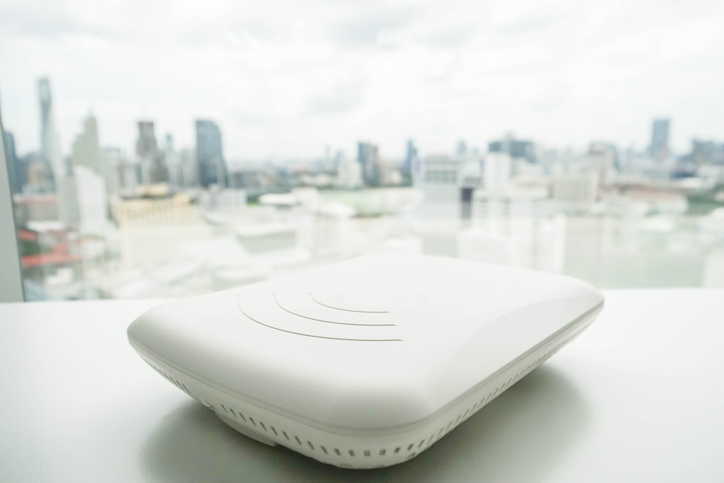
The CW9178I is positioned as an ultra-high-performance indoor access point. With four 4×4 radios and an aggregate frame rate of up to 24 Gbps, it’s optimized for ultra-dense and high density environments like stadiums, conference halls, and high-capacity enterprise buildings. The device supports quad-radio mode for dual 5 GHz operation, and also offers dual radio capabilities, enabling even greater channel capacity and performance flexibility.
On the other hand, the CW9176I is a high-performance tri-band AP with three 4×4 radios, offering a maximum frame rate of 18 Gbps. It includes an internal omnidirectional antenna and is ideal for large-scale indoor deployments such as offices, educational institutions, and healthcare environments. Both models integrate seamlessly into the Meraki ecosystem and support Cisco Catalyst Center for hybrid management. Flexible deployment options are available for both models, supporting cloud, on-premises, and hybrid management to suit a wide range of installation scenarios.
Physically, the CW9178I is slightly larger and heavier, measuring 9.9 x 9.9 x 2.0 inches and weighing 4.1 lbs. The CW9176I comes in at 9.5 x 9.5 x 2.0 inches and 3.4 lbs. Both models include robust mounting kits and feature plenum-rated casings for ceiling installations.
When it comes to antennas, both APs use an internal antenna with an omnidirectional radiation pattern—there are no external antenna options available for these models. The internal antennas deliver optimal Wi-Fi signal coverage, and their peak gains reach up to 5.5 dBi (2.4 GHz), 6.0 dBi (5 GHz), and 6.0 dBi (6 GHz), depending on the frequency band. Some Cisco wireless access points offer integrated directional antennas or support for external antennas via specific connectors and accessories for specialized deployments, but the CW9178I and CW9176I focus exclusively on internal antenna solutions.
The CW9178I supports dual 5 GHz operation in quad-radio mode, giving it an edge in signal steering and channel density. Meanwhile, the CW9176I includes a software-defined flex radio, allowing for dual 5 GHz or tri-band operation depending on network needs.
These hardware differences influence deployment: choose CW9178I for dense, complex environments where traffic segmentation is vital; opt for CW9176I in standard enterprise deployments prioritizing cost efficiency and reliable coverage.
The CW9178I shines with its quad-radio setup—2.4 GHz, two 5 GHz radios, and 6 GHz—delivering up to 24 Gbps aggregate throughput. This setup is ideal for environments with thousands of concurrent connections, such as stadiums or large campuses.
The CW9176I, with its tri-radio configuration, offers a solid 18 Gbps maximum throughput. It supports simultaneous operations in 2.4 GHz, 5 GHz, and 6 GHz bands, making it suitable for enterprise-grade performance.
Both models feature 4×4:4 MU-MIMO, OFDMA, and support for 4096-QAM under 802.11be, with advanced multiple output capabilities that enhance network capacity and efficiency in high-density environments. The addition of Multi-Link Operation (MLO) ensures consistent performance across bands. Compared to previous standards like Wi fi 6 and Wi fi 6e, Wi-Fi 7 in these models brings higher data rates, multi-link operation, and improved spectrum utilization for demanding applications. While both APs support dense deployments, the CW9178I is tailored for high-traffic zones requiring superior channel bandwidth, with both models focused on delivering reliable wireless performance in demanding environments.
Security is robust across both models, with a layered approach that protects against a wide range of threats. Each access point supports WPA3 Enterprise, Enhanced Open (OWE), and WPA3-Suite B, ensuring modern encryption standards are enforced. In addition to integrated Layer 7 firewalls, both the CW9176I and CW9178I feature real-time WIDS/WIPS with Cisco Meraki’s Air Marshal, actively scanning for rogue access points, spoofing attempts, and anomalous behavior. This dedicated security radio enables continuous RF analytics, spectrum analysis, and RF interference detection, providing 24/7 threat monitoring without impacting client traffic.
Administrators can also configure application-aware traffic shaping, define SSID-based policies, and enforce context-aware access control using Cisco ISE integration. PCI compliance tools and detailed audit logs make it easy to stay aligned with industry-specific security standards.
From a management perspective, Meraki’s cloud dashboard centralizes operations across all locations. For organizations preferring traditional deployments, wireless controllers are available for on-premises management, and these access points can seamlessly integrate into a comprehensive wireless platform that combines hardware, software, and security. IT teams can leverage Meraki Health for AI-driven anomaly detection and automated optimization. Meanwhile, Cisco Spaces adds location-based analytics and proximity engagement features, useful for retail and smart office environments. Whether deploying CW9176I or CW9178I, network admins benefit from seamless updates, remote diagnostics, and full-stack visibility—all within a single, intuitive interface. Meraki’s management ecosystem also delivers investment protection, allowing organizations to adapt and expand their networks without costly hardware replacements.
The Cisco Meraki CW9176I access point is engineered to work hand-in-hand with the Cisco Networking Subscription, offering organizations a unified licensing model that streamlines network operations and management. With this subscription, IT teams benefit from Cisco Wireless Essentials, which provides all the core features needed for reliable, high performance connectivity and simplified network management. For organizations seeking even more advanced capabilities, Cisco Wireless Advantage can be added to unlock enhanced location analytics, IoT integration, and additional security features.
This flexible deployment model allows businesses to scale their wireless infrastructure as needs evolve, without the complexity of managing disparate licenses or hardware. The unified licensing approach ensures that all access points, including the CW9176I, are covered under a single, easy-to-manage agreement—reducing administrative overhead and supporting seamless entry into the Cisco wireless ecosystem. By leveraging the Cisco Networking Subscription, organizations can confidently deploy high performance wireless solutions with advanced security features and flexible management options, all while future-proofing their investment.
The CW9176I access point is designed with application-aware traffic shaping at its core, empowering administrators to prioritize bandwidth for critical applications and ensure optimal performance across the network. This is especially valuable in environments where high performance connectivity is essential for video streaming, virtual reality, and augmented reality experiences. By intelligently managing network resources, the CW9176I ensures that mission critical applications always receive the bandwidth they need, even during peak usage.
The device’s software defined flex radio further enhances network optimization by enabling dynamic load balancing and advanced traffic shaping. This means organizations can adapt to changing demands in real time, maintaining seamless connectivity for critical applications and delivering a consistently high performance user experience. Whether supporting high definition video, collaborative tools, or immersive AR/VR platforms, the CW9176I ensures that every application gets the attention it deserves, keeping your network running smoothly and efficiently.
Seamless integration with the Cisco ecosystem is a hallmark of the CW9176I access point. By connecting with Cisco Catalyst Center, organizations gain access to powerful tools for automated RF optimization, robust connectivity, and centralized management. The CW9176I also works in concert with Cisco Spaces, enabling advanced location-based services and analytics that drive smarter business decisions.
With support for multiple bands simultaneously—including 2.4 GHz, 5 GHz, and 6 GHz—the CW9176I delivers optimal performance and uninterrupted wireless connectivity across diverse environments. This deep integration with Cisco Catalyst and other Cisco solutions ensures that organizations can build a high performance wireless infrastructure tailored to their unique needs, all while benefiting from unified licensing models and simplified management. The result is a future-ready network that’s easy to deploy, manage, and scale.
Power requirements differ due to the radio architecture and performance profile of each model. The CW9178I, with its quad-radio design and dual 10G Ethernet ports, requires up to 47W for full functionality, especially when running USB peripherals. It is fully compliant with 802.3bt (UPOE) standards, which must be considered when choosing switches or PoE injectors. Without sufficient power, the device will default to reduced functionality, disabling some radios or operating in tri-radio mode. In addition to PoE injectors, an ac adapter is available as an alternative power supply option for these models, allowing deployment flexibility where PoE is not available.
The CW9176I has a slightly lower power ceiling, peaking at 39W with USB usage. It also supports 802.3bt, but can function with 802.3at (PoE+), albeit with reduced performance—typically operating in 2×2 mode across its radios and lowering link speeds. This makes it more flexible for environments with mixed or older network infrastructure.
Both models support LLDP and Cisco Discovery Protocol (CDP) for power negotiation, ensuring optimal performance when connected to compatible equipment. It’s essential to plan infrastructure accordingly—using compliant switches or certified PoE injectors like MA-INJ-6 or CW-INJ-8—to unlock the full capabilities of these access points. Both the CW9172I and CW9176I feature an energy efficient design, delivering high-performance Wi-Fi 7 connectivity while minimizing power consumption for sustainability and cost savings.
For reliable performance, the recommended operating temperature range for these access points is 0°C to 40°C (32°F to 104°F).
The CW9178I is purpose-built for ultra-dense, mission-critical environments where wireless performance can’t afford compromise. Ideal for stadiums, convention centers, university campuses, large healthcare facilities, and healthcare clinics, this model thrives in places with high client density, bandwidth-heavy applications, and redundancy needs. It is especially suited for advanced applications such as IoT integration, real-time analytics, AR/VR, telehealth, and high-bandwidth media streaming. The CW9178I also enables asset tracking through advanced location services, supporting precise indoor positioning and real-time monitoring for smart building and workflow optimization. Its dual 10G mGig Ethernet ports allow for link aggregation and failover, ensuring uninterrupted service even if one link fails.
In contrast, the CW9176I fits seamlessly into typical enterprise and institutional settings. It’s optimized for offices, K–12 schools, retail stores, hospitals, and healthcare clinics, where reliable, high-performance Wi-Fi is essential but extreme density isn’t a concern. With a balance of performance and efficiency, it also works well for branch offices or distributed enterprise locations that require robust connectivity without over-investing in top-tier hardware.
Both models support multiple regulatory domains, allowing for simplified global deployment and compliance with regional requirements.
Ultimately, the choice comes down to environment demands: CW9178I is the powerhouse for wireless-intensive environments, while CW9176I is the agile performer for general enterprise deployments.
From a pricing perspective, the CW9178I sits at the premium end of Cisco Meraki’s Wi-Fi 7 lineup. Its quad-radio design, dual 10G Ethernet support, and 24 Gbps throughput justify the cost in high-demand settings. Organizations with performance-intensive workflows, such as real-time HD video conferencing, AR/VR platforms, or high-volume telemetry, will benefit from the investment through greater reliability and scalability.
On the other hand, the CW9176I offers substantial cost savings while still delivering tri-band Wi-Fi 7 performance and cloud-based management. It includes the same core Meraki dashboard features and supports enterprise-grade security protocols. For many businesses, this model hits the sweet spot between affordability and functionality—especially in deployments where extreme throughput isn’t essential.
When evaluating total cost of ownership (TCO), it’s important to consider not only the upfront hardware price but also PoE infrastructure, mounting complexity, and license tiers. For organizations looking to future-proof their wireless environments without overspending, CW9176I is a smart and scalable solution. But for those who demand peak performance, CW9178I is a long-term investment that pays dividends in uptime and user experience.
Here’s a quick spec-by-spec comparison of CW9178I vs CW9176I:
| Feature | CW9178I | CW9176I |
| Radios | Quad-Radio (Dual 5 GHz) | Tri-Radio (One 5 GHz) |
| Max Throughput | 24 Gbps | 18 Gbps |
| MU-MIMO/OFDMA Support | Yes (4×4:4) | Yes (4×4:4) |
| Power Requirement | 47W (802.3bt) | 39W (802.3bt) |
| Ethernet Ports | 2x 10G | 1x 10G |
| USB Port | Yes (9W) | Yes (9W) |
| Mounting Options | Ceiling/Wall/Desktop | Ceiling/Wall/Desktop |
| Dimensions (inches) | 9.9 x 9.9 x 2.0 | 9.5 x 9.5 x 2.0 |
| Weight | 4.1 lbs | 3.4 lbs |
| Ideal For | High-density, high-performance | General enterprise deployments |
Cisco’s commitment to innovation ensures that the CW9176I access point is ready for the future of wireless networking. Built to support the latest advancements in Wi-Fi 7 and next generation wireless technologies, the CW9176I positions organizations to stay ahead of evolving connectivity demands. As new features and standards emerge, Cisco’s ongoing development efforts will continue to enhance the capabilities of the CW9176I, delivering even greater performance and flexibility.
In addition to cutting-edge technology, Cisco provides comprehensive support for the CW9176I, including detailed online documentation, training resources, and responsive technical assistance. This ensures that organizations can maximize the value of their investment in Wi-Fi and next generation wireless solutions, with the confidence that expert help is always available when needed.
To learn more about the Cisco Meraki CW9176I access point—including technical specifications, deployment best practices, and pricing—visit the Cisco website or connect with a Cisco authorized reseller like Stratus Information Systems. A wealth of additional resources is available, from in-depth case studies and white papers to webinars and product guides, all designed to help organizations make informed decisions about their wireless infrastructure.
By exploring these resources and leveraging the Cisco Networking Subscription, organizations can ensure they are getting the most from their investment in Cisco wireless solutions. Whether you’re planning a new deployment or optimizing an existing network, expert guidance and comprehensive information are just a click or call away.
Both the CW9178I and CW9176I are powerful, Wi-Fi 7-capable access points designed for next-gen enterprise networks. While CW9178I leads in throughput, dual-5GHz flexibility, and link redundancy, CW9176I balances performance and cost for broader deployment scenarios.
Whether you’re upgrading a school, modernizing office connectivity, or supporting thousands of stadium users, Cisco Meraki has you covered. For tailored recommendations, deployment planning, and procurement, reach out to Stratus Information Systems—your expert in Meraki wireless infrastructure.