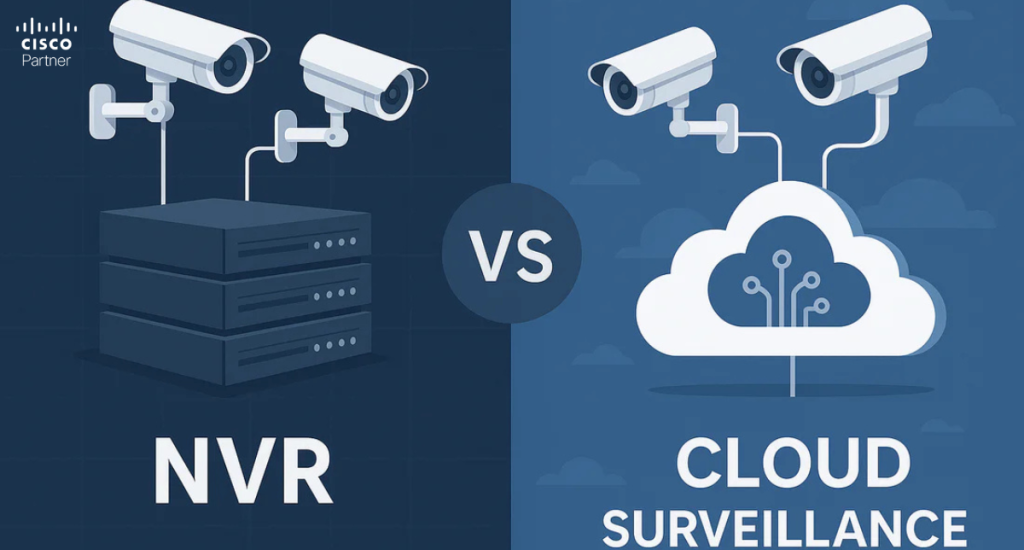
Physical security surveillance has followed the same architecture for decades: cameras capture footage, transmit it to network video recorders (NVRs), and IT teams manage storage, retrieval, and retention through on-premises systems. This model worked adequately when organizations needed basic recording capabilities and occasional footage review.
But modern security requirements extend far beyond simple recording. Organizations need intelligent motion detection, people counting, occupancy monitoring, and instant access to footage from any location. They need systems that integrate with access control, send real-time alerts, and provide analytics without requiring dedicated security teams to manually review hours of footage.
Traditional NVR-based systems struggle to deliver these capabilities. The architecture that made sense when analog cameras dominated creates friction in environments where security teams expect cloud accessibility, AI-powered analytics, and simplified management across multiple locations.
A recent deployment for DanHil Containers illustrates why organizations are migrating from NVR systems to cloud-managed camera platforms. The company’s IT Director recognized that expanding physical security coverage required modernizing beyond outdated NVR technology while leveraging their existing Cisco infrastructure investment.
By deploying Cisco Meraki’s Gen 3 cameras, DanHil eliminated the complexity and limitations of NVR systems while gaining advanced features that traditional surveillance architectures can’t easily support. Strategic coordination with Cisco during supply chain challenges even resulted in upgraded camera capacity at no additional cost an outcome impossible with typical vendor relationships.
Network video recorders served organizations well during the transition from analog to digital surveillance, but their architectural limitations become increasingly apparent as security requirements evolve.
Single Point of Failure
NVR systems concentrate all recording, storage, and management functions in centralized hardware. If the NVR fails due to hardware malfunction, power issues, or environmental factors-the entire surveillance system stops recording. Organizations lose security coverage across all cameras connected to that recorder until the NVR is repaired or replaced.
This vulnerability extends beyond complete failures. NVRs experiencing partial failures might record from some cameras while dropping others, creating coverage gaps that aren’t immediately obvious. Security teams may discover missing footage only when they need to review incidents that occurred during the failure period.
Storage Limitations and Management Complexity
NVRs include fixed storage capacity determined at purchase time. As organizations add cameras or increase retention periods, storage fills quickly. Expanding capacity requires physically installing additional hard drives, replacing the entire NVR with higher-capacity models, or deploying additional NVR units.
Each of these approaches creates complications. Adding drives requires compatible hardware and technical expertise to install and configure storage properly. Replacing NVRs involves data migration and reconfiguration of all connected cameras. Multiple NVRs create management fragmentation where security teams must check separate systems to locate footage.
Storage management also creates ongoing administrative burden. IT teams must monitor storage utilization, configure retention policies, and manually archive important footage before automatic deletion occurs. These tasks consume time that could be spent on higher-value security initiatives.
Limited Remote Access
Traditional NVR systems were designed for on-premises viewing through connected monitors or local network clients. Remote access, when available, typically requires VPN connections, port forwarding configurations, and network security exceptions that create potential vulnerabilities.
Security teams working from home, responding to after-hours incidents, or managing multiple facilities struggle with NVR remote access limitations. Viewing footage requires VPN authentication, navigating unfriendly interfaces designed for local use, and dealing with bandwidth constraints that make remote video streaming impractical.
Difficult Multi-Site Management
Organizations with multiple locations face compounded challenges. Each site requires separate NVR hardware, individual configuration, and location-specific storage management. Security teams managing facilities across cities or regions must access each site’s NVR independently—no centralized interface provides unified visibility.
This fragmentation prevents effective cross-location security operations. Identifying patterns across facilities, comparing footage from multiple sites, or managing consistent retention policies requires manual coordination across disparate systems.
Lack of Intelligent Analytics
NVRs focus on recording and playback, not intelligence. Traditional systems capture everything cameras see but provide minimal tools for extracting insights from that footage. Security teams must manually review hours of video to find specific events, identify patterns, or investigate incidents.
Some higher-end NVR systems offer motion detection or basic analytics, but processing occurs on the NVR hardware with limited computational resources. As camera counts increase, NVR performance degrades, forcing organizations to choose between analytics capabilities and recording quality.
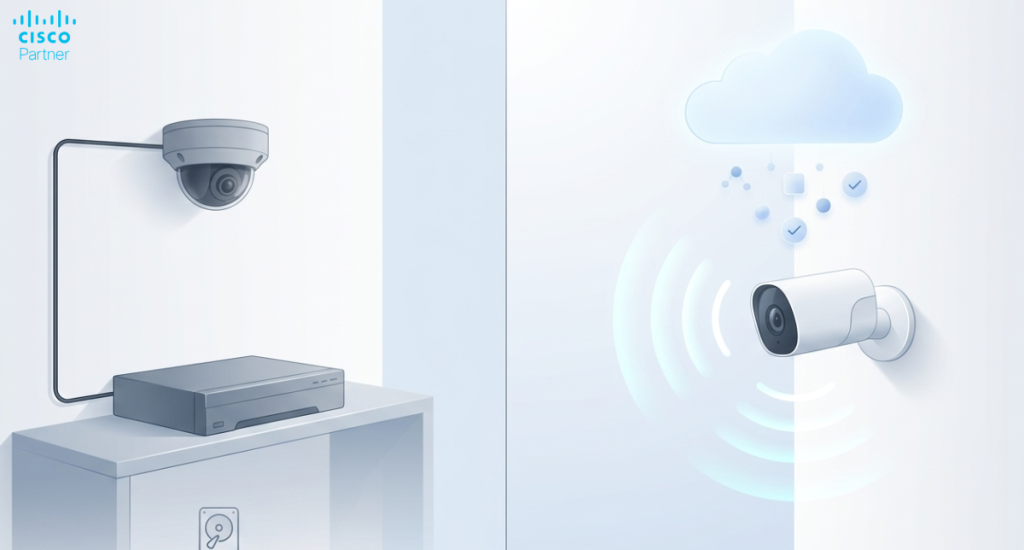
Cloud-managed surveillance platforms like Cisco Meraki fundamentally redesign camera architecture to eliminate NVR limitations while introducing capabilities impossible with traditional systems.
Distributed Architecture
Meraki cameras include onboard storage, eliminating dependence on centralized recorders. Each camera stores footage locally using built-in solid-state drives. If network connectivity is lost, cameras continue recording to local storage. When connectivity resumes, footage uploads to the cloud for centralized access and long-term retention.
This architecture provides resilience that NVR systems can’t match. Individual camera failures affect only that specific camera—all other cameras continue recording normally. Network outages don’t create system-wide recording failures. Organizations maintain security coverage even during infrastructure disruptions.
Cloud Storage and Management
Footage uploads to Cisco’s cloud infrastructure where it’s accessible through the Meraki dashboard from any internet connection. Security teams view live feeds and archived footage from laptops, tablets, or phones without VPN requirements or complex network configurations.
Retention policies are configured once in the dashboard and apply automatically across all cameras. Organizations never worry about storage capacity management-Meraki handles infrastructure scaling transparently. Adding cameras or extending retention periods doesn’t require hardware upgrades or capacity planning.
Unified Multi-Site Visibility
Organizations with locations across cities, states, or countries manage all cameras through a single dashboard. Security teams view footage from any location, configure consistent policies across facilities, and receive alerts from all sites in one interface.
This centralization enables security operations impossible with NVR systems. Comparing footage from multiple locations during investigations, identifying trends across facilities, and managing consistent security posture across the organization all become straightforward.
Built-In Analytics and Intelligence
Cisco Meraki cameras include onboard processing performing analytics at the edge rather than overwhelming centralized infrastructure. Motion detection, people counting, and occupancy monitoring occur on the camera itself with results uploaded to the dashboard for trending and alerting.
These analytics require no additional servers, software licenses, or infrastructure investment. Every Meraki camera includes the processing capability to perform intelligent analysis, sending only relevant alerts and summary data rather than requiring security teams to manually review footage.
Seamless Integration with Network Infrastructure
Organizations already using Cisco Meraki for networking benefit from unified management. Meraki MV cameras appear in the same dashboard managing switches, access points, and security appliances. IT teams configure camera VLANs, monitor bandwidth utilization, and troubleshoot connectivity issues using familiar tools.
This integration simplifies deployments and reduces training requirements. Organizations don’t need separate teams for network and security infrastructure-the same IT staff manages everything through one interface.
Cisco’s third-generation MV cameras represent significant advances over previous models, making them particularly attractive for organizations modernizing from NVR systems.
Enhanced Image Quality
Gen 3 cameras support higher resolutions with improved low-light performance. Organizations no longer choose between wide coverage and image clarity – modern sensors capture detailed footage across entire fields of view.
Improved dynamic range handles challenging lighting conditions common in industrial, retail, and outdoor environments. Cameras maintain image quality when viewing areas with both bright sunlight and deep shadows, preventing the washed-out or dark footage that plagued earlier generation surveillance systems.
Increased Storage Capacity
Gen 3 models include larger onboard storage supporting extended retention even during network outages. A camera that previously stored 30 days might now retain 60 or 90 days locally, providing substantial buffer for environments with periodic connectivity challenges.
This additional capacity also supports higher resolution recording without reducing retention periods. Organizations deploying 4K cameras maintain the same retention timelines they had with 1080p systems rather than choosing between quality and storage duration.
Advanced Analytics
Third-generation cameras include enhanced processing supporting more sophisticated analytics. People counting accuracy improves, occupancy detection becomes more reliable, and motion detection generates fewer false alerts.
These improvements reduce the noise in security alerts. Teams receive notifications about genuine events rather than being overwhelmed by motion from moving shadows, environmental changes, or irrelevant activity.
Power over Ethernet Plus Support
Gen 3 cameras support PoE+ (Power over Ethernet Plus) enabling features that require additional power—PTZ (pan-tilt-zoom) mechanisms, enhanced processing, or environmental controls. Organizations can deploy more capable cameras without running separate power circuits, simplifying installation and reducing costs.
Organizations migrating from NVR systems benefit from thoughtful camera selection matching specific coverage requirements rather than deploying generic models everywhere.
Indoor vs. Outdoor Models
Meraki offers cameras optimized for different environments. Indoor models focus on compact form factors and aesthetics appropriate for office or retail settings. Outdoor cameras include weatherproof enclosures, wider temperature ranges, and environmental sealing for harsh conditions.
DanHil Containers needed coverage for both warehouse interiors and outdoor loading areas. Selecting appropriate models for each environment ensured cameras operate reliably without over-specifying indoor cameras with outdoor-rated features they don’t need or under-specifying outdoor cameras that fail in weather exposure.
Fixed vs. PTZ Cameras
Fixed cameras provide constant coverage of defined areas. PTZ cameras offer flexibility to pan, tilt, and zoom across wider areas, either manually during investigations or automatically following motion.
Most deployments use primarily fixed cameras with strategic PTZ placement in areas requiring flexible coverage. Relying entirely on PTZ cameras creates gaps when the camera is viewing one area, leaving other sections unmonitored.
Resolution and Storage Trade-offs
Higher resolution provides more detail but consumes more storage and bandwidth. Organizations should deploy resolution appropriate to monitoring requirements rather than maximizing resolution everywhere.
Entry monitoring might require 4K resolution for facial recognition and license plate capture. General warehouse monitoring might only need 1080p for overall activity awareness. Matching resolution to purpose optimizes storage utilization and bandwidth consumption.
Even with superior technology, deployment success depends on equipment availability and delivery timing. The DanHil Containers deployment highlighted how partner relationships impact project outcomes when supply chain challenges arise.
Cisco Inventory Coordination
Camera demand fluctuates based on construction cycles, fiscal year-end buying, and broader market conditions. Popular models sometimes face extended lead times when demand exceeds immediate production capacity.
Stratus worked directly with Cisco to understand inventory availability across the full Meraki camera line. Rather than simply accepting long lead times for initially specified models, this coordination identified alternative options shipping faster while meeting or exceeding project requirements.
Capacity Upgrades at No Additional Cost
When supply chain analysis revealed certain higher-capacity camera models available to ship sooner than standard models, Stratus negotiated upgrades at original pricing. DanHil received cameras with larger onboard storage and enhanced capabilities without budget impact—simply by having a partner who actively managed inventory challenges rather than accepting delays.
This outcome demonstrates the value of working with partners maintaining active Cisco relationships rather than transactional resellers who simply process orders as submitted. Strategic partners invest time navigating supply chain complexities, identifying alternatives, and advocating for customers with manufacturers.
Flexible Deployment Scheduling
Understanding inventory dynamics also enabled phased deployment strategies. Rather than delaying the entire project until all cameras were available, Stratus coordinated partial shipments allowing installation to begin in high-priority areas while remaining equipment entered production.
This flexibility maintained project momentum and delivered immediate security value rather than waiting months for complete inventory availability before starting any installation.
Organizations planning camera system upgrades should evaluate beyond just replacing NVRs with equivalent cloud systems.
Integration with Access Control
Modern security architectures combine surveillance with access control, visitor management, and intrusion detection. Cloud-managed systems facilitate integration that’s difficult or impossible with traditional NVR platforms.
Meraki cameras integrate with access control systems, automatically recording when doors are accessed and correlating footage with entry events. This integration provides context impossible when security systems operate independently.
Bandwidth and Network Impact
Cloud cameras upload footage continuously, creating sustained network traffic that NVR systems confined to local recording didn’t generate. Organizations must plan network capacity accordingly.
However, Meraki cameras include intelligent bandwidth management. Only motion events upload immediately at full resolution. Background footage uploads during off-peak hours. Cameras adapt upload bandwidth based on network conditions, preventing security traffic from overwhelming business operations.
Total Cost of Ownership Analysis
While cloud cameras eliminate NVR hardware purchases, they include subscription licensing for cloud storage and management. Organizations should evaluate total cost over the system lifecycle rather than comparing only initial hardware costs.
TCO analysis should include:
When accounting for all factors, cloud-managed systems often provide comparable or lower total cost while delivering substantially better capabilities and operational efficiency.
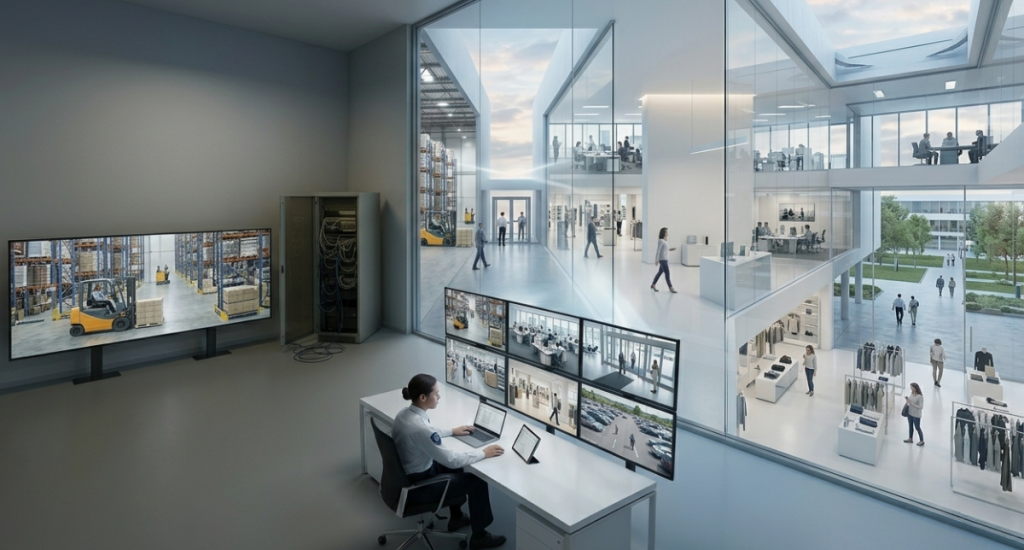
Camera deployments involve more than equipment selection. Successful projects require understanding coverage requirements, optimizing camera placement, coordinating with network infrastructure, and navigating inventory availability.
Needs Assessment and Scoping
Quality partners evaluate what organizations actually need to accomplish rather than simply quoting equipment. DanHil wanted to expand physical security coverage and modernize technology—objectives that could be met through multiple approaches.
Stratus assessed coverage gaps, identified monitoring priorities, and recommended camera models and placements achieving security goals efficiently. This consultative approach prevents over-deployment in low-value areas and under-deployment where coverage matters most.
Cisco Relationship Leverage
Partners with strong Cisco relationships navigate challenges that purely transactional resellers can’t address. When inventory issues arise, access to Cisco account teams and supply chain visibility enables creative problem-solving.
The capacity upgrades at no additional cost in the DanHil deployment resulted directly from partner relationships. Cisco had no obligation to upgrade equipment or expedite delivery, but valued partners receive collaboration that benefits both customer and manufacturer.
Integration Expertise
Camera deployments intersect with network infrastructure, storage requirements, and security policies. Partners experienced with Cisco security solutions help organizations design cohesive architectures rather than deploying cameras as isolated systems.
This expertise ensures cameras integrate properly with VLANs for traffic segmentation, Quality of Service configurations for bandwidth management, and firewall policies for secure cloud connectivity.
Organizations ready to move beyond NVR limitations should approach cloud camera migrations strategically.
Phased Deployment
Few organizations need to replace all cameras simultaneously. Phased approaches allow learning and refinement:
This staging spreads capital expenditure across multiple budget cycles while delivering immediate value in priority areas.
Retention Period Planning
Cloud storage costs scale with retention duration. Organizations should evaluate actual retention needs rather than defaulting to maximum retention everywhere.
Different areas may warrant different retention:
Right-sizing retention optimizes costs while meeting actual security requirements.
Training and Change Management
Moving from NVR interfaces to cloud dashboards requires security team training. Ensure staff understand:
Proper training ensures organizations utilize capabilities they’re paying for rather than replicating NVR workflows in cloud systems.
The migration from NVR systems to cloud-managed cameras represents more than technology refresh—it’s an operational transformation enabling security capabilities impossible with traditional architectures.
Organizations gain remote accessibility, intelligent analytics, multi-site visibility, and resilient recording without the complexity and limitations of centralized NVR systems. Third-generation Meraki cameras deliver these benefits with enhanced image quality, increased storage capacity, and advanced processing supporting sophisticated analytics.For organizations evaluating camera system upgrades, expanding security coverage, or frustrated with NVR limitations, contact Stratus Information Systems to discuss your specific requirements. Our experience deploying Meraki camera systems and navigating Cisco relationships helps organizations build security infrastructure that delivers genuine operational value beyond simple recording.