A customer recently renewed a three-year license for a Cisco Meraki MX84 security appliance. The transaction processed smoothly, payment cleared, and the license arrived as expected. There was just one problem: the MX84 reaches end of support in October 2026—only 2.5 years away.
That customer understood what they were doing. They knew about the upcoming end-of-life date and planned to upgrade the hardware within the next year, applying the remaining license value toward a newer MX85. But here’s the concerning part: their reseller never mentioned the EOL timeline, never asked about hardware refresh plans, and never suggested alternatives.
This isn’t just a missed sales opportunity—it’s a failure of the consultative partnership that organizations deserve from their technology providers. End-of-life planning affects network security, budget forecasting, and long-term infrastructure strategy. Partners who don’t raise these conversations aren’t protecting customer interests.
Cisco uses specific terminology to describe product lifecycle stages. Understanding the distinction between these terms helps you plan appropriately.
End of Sale (EOS)
This is when Cisco stops selling new units of a particular model. You can no longer order the hardware through authorized channels, though existing inventory may remain available through resellers for a limited time. For the MX84, end of sale occurred in October 2024.
After end of sale, replacement units for warranty claims become increasingly difficult to source. Organizations with critical infrastructure dependent on specific models should consider purchasing spare units before stock depletes entirely.
End of Support (EOL)
End of support marks when Cisco ceases providing software updates, security patches, and technical support for a product. This date typically occurs 2-5 years after end of sale depending on product category. The MX84 reaches end of support in October 2026.
After this date, the hardware continues functioning, but you won’t receive:
Last Date of Support (LDOS)
Some products include extended support periods beyond the standard end-of-support date. During this time, Cisco may provide critical security patches but won’t release new features or address non-critical bugs. Not all products receive extended support, and terms vary by model.
Several Meraki products reach end-of-life milestones during 2026, affecting organizations across all product categories.
Security Appliances
The MX84 represents the most significant 2026 EOL impact for security appliances:
The MX84 has been a popular choice for organizations needing robust security capabilities in a compact form factor. Its pending EOL affects hundreds of deployments where branch offices rely on its integrated firewall, VPN, and SD-WAN capabilities.
Access Points
Several older access point models reach or have recently passed EOL milestones:
Organizations with these models in high-density deployments—schools, conference centers, warehouses—should prioritize replacement planning. WiFi 6 and WiFi 6E adoption continues accelerating, making EOL an opportunity to upgrade to newer wireless standards rather than simply replacing aging equipment with equivalent models.
Switches
The MS225 series nears end of life:
These switches served many organizations well in basic network deployments, but their approaching EOL creates an opportunity to evaluate whether your switching needs have evolved since initial deployment. Higher port counts, PoE++ capabilities, or 2.5GbE support might better serve current requirements.
Cameras
First-generation MV cameras approach EOL:
While these dates extend into 2027, organizations with large camera deployments benefit from early planning given the time required to schedule installation across multiple locations and the budget implications of wholesale camera replacement.
The relationship between hardware EOL and license purchases creates planning complexities many organizations overlook.
Stranded License Value
Meraki licenses remain active for their full term regardless of whether the underlying hardware reaches EOL. If you purchase a five-year license for an MX84 today and it reaches end of support in October 2026, you’ll have approximately three years of unused license value.
Cisco allows license transfers to replacement hardware, but this process requires coordination and may involve prorated value calculations. Organizations that don’t plan for these transfers may feel they’ve wasted license expenditures on equipment they can no longer use.
Security Vulnerability Windows
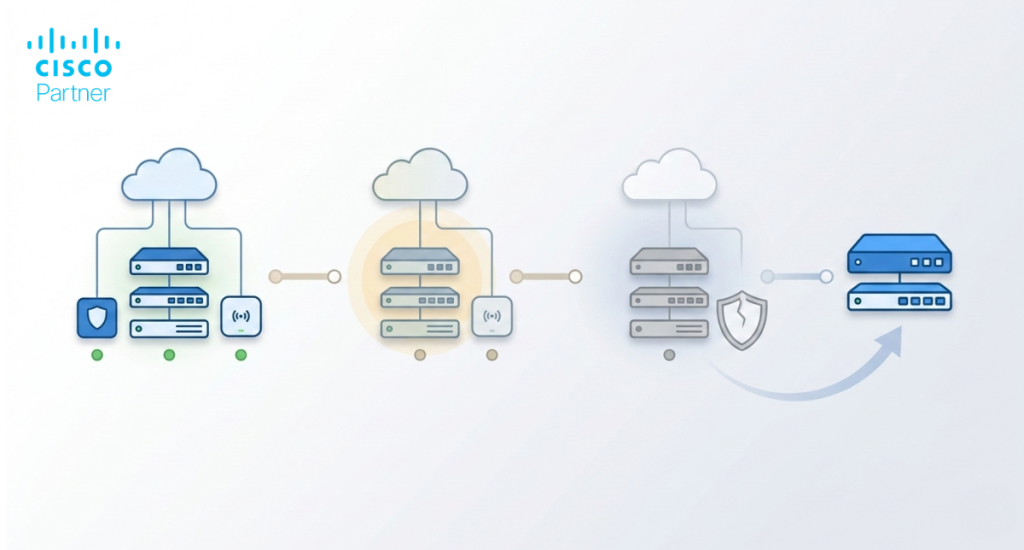
The most critical EOL impact involves security. Once an appliance reaches end of support, it stops receiving security patches. Newly discovered vulnerabilities remain unpatched, creating expanding attack surfaces as researchers identify exploits.
For Cisco Meraki firewalls protecting sensitive networks, this timeline is unacceptable. Network security appliances reaching EOL should be replaced before their support date expires, not after. Purchasing multi-year licenses for equipment approaching EOL extends the timeline when vulnerable hardware remains in production.
Compliance Implications
Many regulatory frameworks require organizations to maintain current security patches on network infrastructure. PCI-DSS, HIPAA, and various state data protection regulations all reference patch management as core security controls.
Equipment that can’t receive patches fails compliance audits. Organizations in regulated industries can’t simply continue operating EOL equipment until it fails—compliance requirements often force replacement regardless of whether the hardware still functions adequately.
Budget Planning
Hardware refresh cycles should align with budget planning cycles. Finding out your MX84 needs replacement when it reaches EOL in October 2026 creates budget pressure if your organization didn’t plan capital expenditure for network equipment that year.
Consultative partners flag upcoming EOL dates during license renewals specifically to give you advance notice for budget planning. A partner mentioning “your MX84 reaches EOL in 2026—let’s discuss refresh timing” enables you to incorporate replacement costs into next year’s IT budget rather than scrambling for emergency funding.

Understanding replacement options and how existing licenses transfer helps you make informed decisions.
MX84 to MX85 Migration
The MX85 serves as the direct replacement for MX84 deployments. Key improvements include:
Most organizations can perform direct swap replacements—remove the MX84, install the MX85, transfer the configuration through the Meraki dashboard. The MX85 supports the same license types as the MX84, so existing licenses transfer without modification.
License Transfer Process
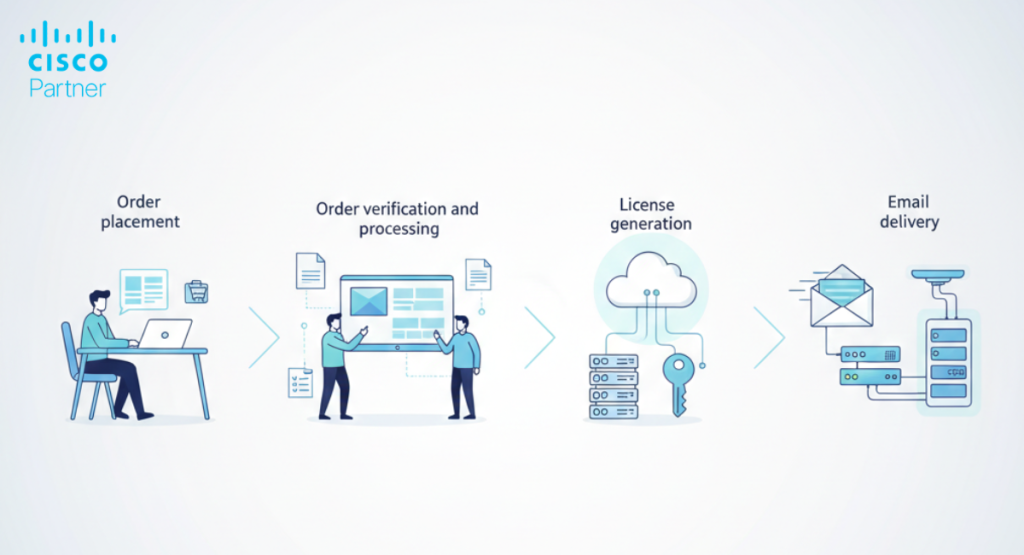
When replacing EOL hardware, licenses can move to new devices through the Meraki dashboard. The process involves:
For devices with multi-year licenses, the remaining license term applies to the replacement hardware. A three-year MX84 license with one year remaining transfers to an MX85, giving you one year of coverage on the new appliance before renewal.
Partial License Value Transfer
In some cases, organizations want to upgrade to higher-tier hardware requiring different license SKUs. An MX84 with Enterprise licensing moving to an MX250 requires Advanced Security licensing for full feature access.
Cisco sometimes offers trade-in programs or upgrade pricing allowing partial credit for unused license time toward higher-tier licenses. Your reseller can check current program availability and calculate potential savings.
Smart organizations plan hardware refreshes well in advance of EOL dates.
18 Months Before EOL
Begin evaluation conversations with your partner. Discuss:
This early conversation doesn’t commit you to immediate replacement but ensures you have information needed for decision-making.
12 Months Before EOL
Finalize replacement plans and incorporate costs into budget processes. For multi-site deployments, create a rollout schedule coordinating hardware arrival, installation resources, and any network downtime windows.
Order long-lead-time items or specialized configurations. Standard Meraki hardware ships quickly, but custom SKUs, high-quantity orders, or specialized mounting hardware may require extended lead times.
6 Months Before EOL
Begin phased replacement. For organizations with dozens or hundreds of devices reaching EOL, six months allows staged deployment without overwhelming IT teams or installers.
Priority goes to:
3 Months Before EOL
Complete replacement of devices in production. Equipment reaching EOL can remain as cold spares for emergency backup, but active production networks should run on supported hardware well before the EOL date arrives.
Document the refresh—which devices were replaced, where old equipment is stored, what licenses transferred to new hardware. This documentation proves valuable during future refresh cycles and compliance audits.

Several methods help you identify which devices in your network are approaching EOL.
Meraki Dashboard Review
The Meraki dashboard shows device models and license expiration dates. While it doesn’t proactively flag upcoming EOL dates, reviewing your device inventory against Cisco’s EOL schedule identifies equipment needing attention.
For organizations with hundreds of Meraki devices, exporting an inventory spreadsheet simplifies the review process. Sort by device model, then cross-reference against EOL schedules.
Cisco EOL Announcements
Cisco publishes end-of-life announcements on their website, typically 6-12 months before end-of-sale dates. Subscribing to Cisco’s product bulletin notifications ensures you receive EOL announcements when published rather than discovering them through dashboard alerts.
Partner Audits
Quality resellers proactively audit customer networks identifying upcoming EOL dates. Stratus Information Systems conducts regular reviews of customer deployments, flagging equipment approaching EOL well in advance of support cutoff dates. This proactive approach gives customers time for planning rather than reactive scrambling.
The MX84 license renewal story illustrates a fundamental divide between transactional resellers and consultative partners.
What Transactional Resellers Do
What Consultative Partners Do
The customer who knowingly purchased a three-year license for an MX84 approaching EOL made an informed decision. They understood the EOL timeline, had a hardware refresh plan, and chose that path deliberately. The problem wasn’t their decision—it was that their reseller never asked questions that would have revealed whether they knew about the EOL or needed guidance.
Consultative partners assume customers don’t track EOL schedules themselves. They proactively raise these conversations, ensuring customers make informed decisions even when the customer doesn’t think to ask.
The same customer who provided EOL feedback also noted missing opportunities around related products. No one asked about their existing WiFi equipment—including an aging MR45 access point. No one inquired about security product needs beyond the firewall renewal.
Security Stack Integration
Organizations buying Cisco Meraki MX firewalls often benefit from integrated security solutions:
These products work together, sharing threat intelligence and providing defense-in-depth. Partners who sell firewalls without discussing complementary security solutions miss opportunities to genuinely protect customer networks.
Hardware Refresh Coordination
Organizations replacing one category of network equipment often have other categories approaching refresh cycles. Asking about switches when selling access points, or inquiring about cameras during firewall discussions, reveals opportunities for coordinated refresh projects that can benefit from volume pricing and simplified project management.
Organizations evaluating Meraki partners should expect proactive guidance on EOL planning.
During License Renewals
Every license renewal conversation should include:
During Hardware Purchases
Equipment purchases should trigger questions about:
Annual Reviews
Organizations with significant Meraki deployments benefit from annual planning reviews covering:
These reviews don’t need to result in immediate purchases. Their value lies in ensuring you have information needed for thoughtful planning rather than reactive decision-making.
Whether you have equipment approaching EOL in 2026 or you’re planning multiple years ahead, a structured approach to hardware refresh helps you maintain modern infrastructure without budget surprises.
Establish Refresh Cycles
Rather than waiting for equipment to reach EOL, establish planned refresh cycles—typically 5-7 years for switches and security appliances, 3-5 years for access points, and 5-10 years for cameras. This approach lets you budget predictably and ensures you benefit from technology improvements rather than running equipment until it reaches EOL.
Coordinate with License Purchases
Align license terms with refresh plans. If you plan to refresh hardware in three years, purchasing five-year licenses creates complexity around license transfers. Matching license duration to expected hardware life simplifies planning even if shorter licenses have slightly higher annual costs.
Work with Partners Who Plan Ahead
The difference between good and great partners often comes down to planning horizon. Good partners help you solve immediate problems. Great partners help you avoid future problems through proactive planning.
For assistance auditing your current Meraki deployment, identifying equipment approaching EOL, or planning hardware refresh strategies aligned with your budget and operational requirements, contact Stratus Information Systems. We help organizations protect their infrastructure investments through consultative guidance that looks beyond individual transactions to long-term success.