The eRate program provides critical funding that enables schools to deploy enterprise-grade networking infrastructure they couldn’t otherwise afford. Schools across the country rely on this funding to refresh aging wireless networks, upgrade outdated switches, and implement security appliances that protect student data and enable modern learning environments.
But eRate funding creates a unique challenge: schools need equipment ready when the funding becomes available, not when the fiscal year begins or when vendor delivery schedules align. The gap between when schools need to commit to equipment purchases and when eRate funding actually arrives can derail even well planned technology projects.
A recent deployment for Holy Comforter Episcopal School demonstrates how strategic coordination between equipment vendors, eRate consultants, and school IT teams solves this timing challenge. The school’s IT Director needed to upgrade their entire network infrastructure-wireless access points, switches, and firewall but the project timeline had to align precisely with eRate funding disbursement dates and consultant deadlines.
By leveraging deferred shipping and billing strategies, Stratus Information Systems helped the school deploy cutting-edge WiFi 7 access points, Meraki Catalyst switches, and a new MX105 security appliance while ensuring every element aligned with eRate requirements and funding availability.
The Schools and Libraries Program (commonly called eRate) provides discounts to schools and libraries for telecommunications, internet access, and internal connections. Schools receive discounts ranging from 20% to 90% based on economic need and location, making enterprise networking equipment accessible to institutions that couldn’t justify full retail pricing.
However, eRate operates on a strict application and funding cycle that creates coordination challenges:
Application Windows
Schools must submit eRate applications during specific filing windows-typically opening in January and closing in late March for the upcoming funding year. These applications require detailed technical specifications, vendor quotes, and competitive bidding documentation. Missing the filing window means waiting another full year for funding.
Funding Commitments
After applications are submitted, the Universal Service Administrative Company (USAC) reviews requests and issues funding commitment decision letters-typically several months after application submission. Schools don’t receive definitive funding approval until these commitment letters arrive, creating uncertainty during the planning phase.
Invoice and Disbursement
Once equipment is delivered and installed, schools submit Form 486 to USAC requesting service start authorization, then invoice for reimbursement. The reimbursement process can take 60-120 days depending on application complexity and USAC processing timelines.
This extended timeline from application to reimbursement creates cash flow challenges. Schools need to either front the full equipment cost and wait months for reimbursement, or structure purchasing agreements that align payment obligations with funding receipt.
Schools planning network upgrades face several timing pressures that don’t naturally align with eRate funding cycles.
Budget Year Misalignment
Many schools operate on fiscal years beginning July 1st. eRate funding years begin July 1st as well, but funding commitments for that year may not arrive until late spring or summer. Schools planning summer installation projects when buildings are empty and network downtime doesn’t disrupt classes need equipment ordered and shipped before funding commitments are finalized.
Competitive Bidding Requirements
eRate requires competitive bidding for services and equipment exceeding certain thresholds. This process adds weeks or months to the procurement timeline. Schools must solicit bids, evaluate responses, select vendors, and document the selection process – all while ensuring equipment availability doesn’t change between bid submission and purchase authorization.
Technology Evolution
The months-long eRate cycle creates risk that specified equipment becomes outdated between application and installation. A school applying for WiFi 6 access points in January might discover WiFi 7 models are available at similar pricing by the time funding is approved in June. However, changing equipment specifications after application submission requires amendments that further delay the project.
Installation Windows
Most schools prefer network infrastructure installations during summer break when downtime doesn’t impact instruction and installers can access every classroom without disrupting learning. This creates a narrow installation window-typically June through August that requires equipment to arrive ready for deployment the moment school ends.
Schools working without experienced partners often face impossible choices: order equipment before funding is guaranteed and risk financial exposure, or wait for funding confirmation and miss the summer installation window.
Deferred shipping and billing strategies create flexibility that aligns equipment procurement with eRate funding realities while meeting school installation timelines.
Deferred Shipping Explained
Deferred shipping allows schools to place equipment orders early in the eRate process while delaying physical shipment until closer to the installation window. This approach provides several advantages:
Equipment Reservation
Placing orders months before installation reserves equipment inventory at locked pricing. Schools avoid stock shortages that can occur with popular models and prevent price increases between application and deployment. The order exists in the vendor’s system with guaranteed availability, but shipping doesn’t trigger until the school confirms readiness.
Flexibility for Specification Changes
Some deferred shipping arrangements allow limited equipment specification changes before shipment. If a school ordered WiFi 6 access points but WiFi 7 becomes available at comparable pricing before shipping, vendors may accommodate specification updates. This flexibility ensures schools receive current technology rather than equipment that’s already dated by installation time.
Installation Timeline Control
Schools working with installers or internal IT teams can coordinate exact shipping dates with installation schedules. Equipment arrives the week before planned installation rather than sitting in storage rooms for months waiting for the installation window to open.
Deferred Billing Explained
Deferred billing extends payment terms to align with eRate reimbursement timelines rather than standard net-30 commercial terms. This structure prevents schools from carrying large equipment costs for extended periods while waiting for eRate funding to arrive.
Payment Schedule Alignment
Standard equipment purchases require payment 30 days after delivery. For a school receiving equipment in June but not receiving eRate reimbursement until September, this creates a 60-90 day funding gap. Deferred billing extends payment terms to match expected reimbursement timelines, eliminating the cash flow burden.
Funding Contingencies
Some deferred billing arrangements include contingencies based on eRate funding approval. If a school’s eRate application receives partial funding rather than the requested amount, the billing structure can adjust to reflect the reduced scope or extended payment timeline. This protects schools from overcommitting financially based on anticipated funding that doesn’t fully materialize.
Budget Year Coordination
Schools with fiscal years beginning July 1st often can’t process payments until the new budget year begins. Deferred billing allows June equipment delivery with payment terms starting after the budget year rolls over, ensuring expenditures charge to the correct fiscal period.
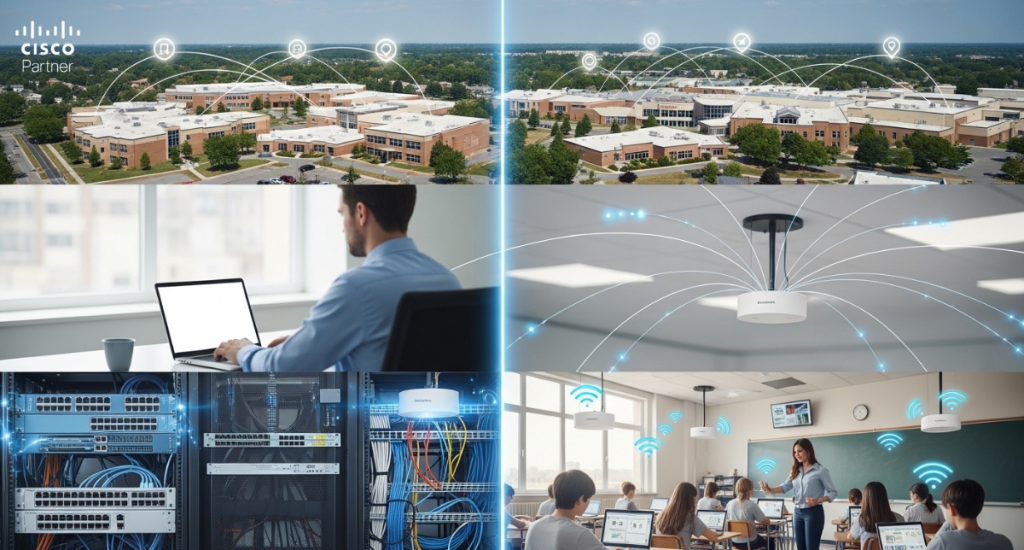
Beyond funding mechanics, schools selecting equipment for eRate-funded projects evaluate technology that delivers long-term value while meeting program eligibility requirements.
Simplified Multi-Site Management
School districts with multiple campuses elementary, middle, and high schools spread across a county-benefit from Cisco Meraki’s cloud-managed architecture. IT teams can monitor and configure networks across all locations from a single dashboard rather than visiting each building for management tasks.
This centralized management reduces the IT staffing required to support distributed networks. A small district IT department can effectively manage networks serving thousands of students across multiple buildings without proportionally increasing headcount.
Long-Term Cost Predictability
Meraki’s subscription licensing model creates multi-year cost predictability that aligns with school budget planning cycles. A three year license purchased with eRate funding covers the full period, eliminating surprise maintenance renewals or unexpected support contract costs that can strain budgets.
Schools planning technology refreshes know exact costs for the full lifecycle rather than discovering hidden expenses after deployment. This transparency simplifies budget forecasting and helps administrators allocate resources across multiple years.
CIPA Compliance
The Children’s Internet Protection Act (CIPA) requires schools receiving eRate funding to implement internet safety policies and technology protection measures. Meraki MX security appliances include integrated content filtering that helps schools meet CIPA requirements without deploying separate filtering appliances or subscribing to third-party filtering services.
Content filtering policies are configured through the Meraki dashboard and apply consistently across all school locations, ensuring compliance doesn’t vary between buildings or require per-site policy management.
eRate Eligible Categories
Meraki equipment falls within eRate Category 2 (internal connections) funding, which covers switches, access points, and wireless controllers. The cloud-managed architecture means schools don’t need to purchase separate wireless controllers the cloud management is included in the access point licensing, reducing overall project costs.
The school’s IT Director partnered with an eRate consultant to navigate the application process and determine equipment needs for a comprehensive network refresh. The existing infrastructure aging access points, legacy switches, and an undersized firewall-no longer supported current enrollment and the increasing bandwidth demands of modern educational technology.
Needs Assessment
The eRate consultant and IT Director identified several requirements driving the equipment selection:
These requirements pointed toward a full-stack Meraki deployment replacing all network infrastructure rather than piecemeal upgrades to specific components.
Equipment Recommendations
Stratus Information Systems scoped the requirements and recommended a comprehensive solution:
WiFi 7 Access Points
Rather than deploying WiFi 6E access points the current standard in many school networks-Stratus recommended the latest WiFi 7 models. This future-focused approach ensures the wireless infrastructure supports emerging device requirements for the full multi-year eRate funding cycle.
WiFi 7 provides several advantages for education environments:
The investment in current-generation technology protects against obsolescence and maximizes the value of eRate funding by deploying equipment that serves the school for 5-7 years rather than 3-4 years.
Meraki Catalyst Switches
The Catalyst switch line combines Cisco’s enterprise switching platform with Meraki’s cloud management. These switches provide:
Catalyst switches represent Cisco’s commitment to converging traditional enterprise switching with cloud-managed architecture, giving schools enterprise capabilities with simplified management.
MX105 Security Appliance
The MX105 serves as the network’s security gateway, providing:
The MX105 capacity supports the school’s current bandwidth requirements with room for growth as internet utilization increases. Right-sizing the security appliance prevents deployment of undersized equipment that requires replacement before the next eRate cycle.
Deferred Shipping and Billing Coordination
The eRate consultant managed the application timeline and funding commitment tracking. Stratus coordinated equipment ordering and delivery to align with the consultant’s schedule and the school’s installation preferences.
Order Placement
Equipment orders were placed early in the eRate cycle, locking in pricing and reserving inventory. However, physical shipment was deferred until the school received funding commitment notification and confirmed installation scheduling with contractors.
This early ordering prevented supply chain issues that could delay deployment. Popular access point models sometimes face extended lead times during peak school purchasing seasons (May-July). Placing orders months earlier ensured equipment availability without requiring the school to receive and store equipment for extended periods.
Shipping Coordination
As the funding commitment arrived and installation dates were confirmed, Stratus coordinated shipment timing with the installation contractor. Equipment arrived on-site the week before scheduled installation, minimizing storage time while ensuring installers had everything needed when work began.
This tight coordination prevented common scenarios where equipment arrives weeks before installers are scheduled (requiring secure storage) or installers arrive before equipment is delivered (requiring rescheduled installation and additional contractor fees).
Billing Timeline
Payment terms were structured to align with the school’s eRate reimbursement timeline. Rather than requiring payment 30 days after delivery, the billing schedule extended to accommodate the Form 486 submission, USAC processing, and reimbursement disbursement.
This arrangement eliminated the cash flow gap that would otherwise require the school to carry the full equipment cost using general operating funds while waiting for eRate reimbursement to arrive.
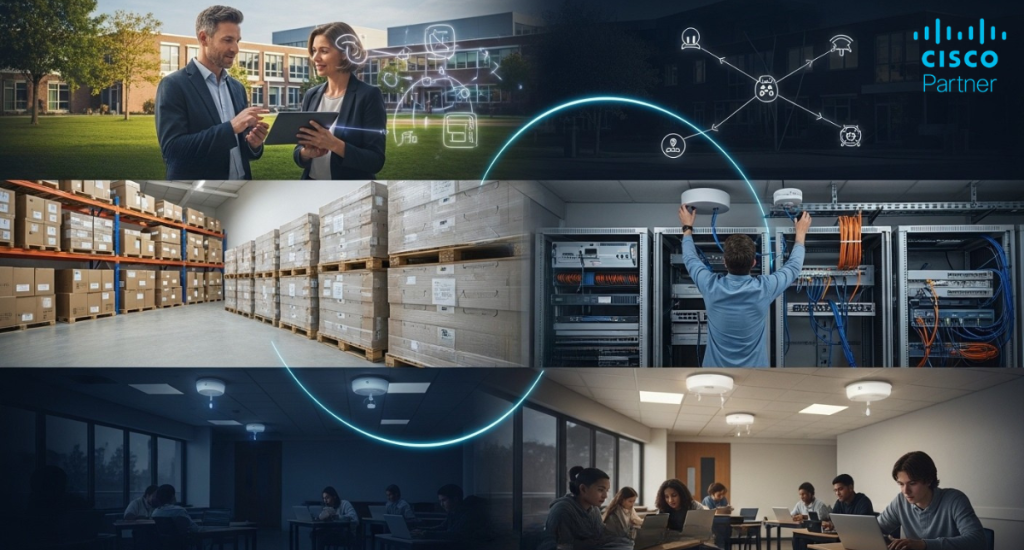
Schools planning network upgrades using eRate funding should follow several practices to ensure smooth project execution.
Partner with eRate Specialists
Working with consultants who specialize in eRate applications helps schools navigate complex requirements, avoid common application errors that delay funding, and structure competitive bidding processes that satisfy program rules. These consultants understand USAC processing timelines and can set realistic expectations for when funding commitments will arrive.
Engage Vendors Early
Contacting equipment vendors during the application planning phase before formal bids are solicited—provides crucial information for budget estimates and technical specifications. Vendors familiar with eRate projects can recommend equipment configurations that maximize funding utilization and suggest flexible purchasing arrangements like deferred shipping and billing.
Plan Installation Timelines
Summer installation windows create compressed schedules where delays cascade quickly. Schools should:
Consider Technology Lifecycle
eRate funding cycles typically occur every 3-5 years for internal connections. Equipment selected should provide reliable service for at least 5 years to avoid refresh requirements before the next funding cycle. Choosing current-generation technology (like WiFi 7 rather than WiFi 6) extends equipment relevance and protects the investment.
Document Everything
eRate requires extensive documentation of competitive bidding, vendor selection, equipment specifications, and expenditures. Schools should maintain organized records of:
This documentation supports reimbursement requests and provides evidence for USAC audits that can occur years after projects are completed.
eRate-funded network projects require vendors who understand both networking technology and education sector procurement requirements. Partners who regularly work with schools bring valuable experience that simplifies complex projects.
eRate Compliance Knowledge
Vendors familiar with eRate requirements structure quotes and documentation meeting program specifications. They understand competitive bidding requirements, eligible vs. ineligible costs, and documentation standards that satisfy USAC review.
Flexible Purchasing Arrangements
Schools need vendors willing to accommodate deferred shipping, extended payment terms, and potential specification adjustments as funding commitments are finalized. Partners focused on education understand these requirements represent standard practice rather than special accommodations.
Installation Coordination
Schools benefit from vendors who coordinate with installation contractors, eRate consultants, and school IT staff to ensure everyone has the information needed for smooth deployment. This coordination prevents miscommunication that leads to delayed projects or equipment compatibility issues.
Stratus Information Systems works extensively with educational institutions navigating eRate funding processes. Our experience with school network deployments, combined with flexible purchasing arrangements and close coordination with eRate consultants, helps schools maximize funding utilization while deploying modern infrastructure that serves students for years to come.
Schools receiving eRate funding should view network upgrades as opportunities to deploy infrastructure serving multiple years rather than addressing immediate needs with minimal solutions.
Full-Stack Standardization
Deploying switches, wireless, and security from a single vendor simplifies management and creates more cohesive security architectures. Mixed-vendor environments require IT teams to master multiple management interfaces, troubleshoot compatibility issues between vendors, and coordinate support across multiple contracts.
Cisco Meraki full-stack deployments manage all infrastructure through one dashboard, reducing IT complexity and improving operational efficiency.
Capacity Planning
Equipment should be sized for expected growth over the funding cycle, not just current enrollment. Schools anticipating enrollment increases, expanding device-per-student ratios, or implementing new bandwidth-intensive programs should deploy infrastructure with sufficient capacity headroom.
Right-sizing equipment during eRate-funded refreshes prevents expensive mid-cycle upgrades using general operating funds when eRate funding isn’t available.
Training and Documentation
eRate funding covers equipment and installation but schools should budget operating funds for staff training ensuring IT teams can effectively manage new infrastructure. Cloud-managed networks like Meraki require different administrative approaches than traditional on-premises systems.
Proper training maximizes the value of sophisticated equipment and prevents underutilization of advanced features schools paid for but don’t know how to configure.
School network infrastructure does more than connect devices to the internet. Modern learning environments depend on reliable, high-performance networks supporting simultaneous video streaming, cloud application access, standardized testing, and the increasing number of devices per student.
The Holy Comforter Episcopal School deployment demonstrates how thoughtful planning, strategic vendor partnerships, and flexible purchasing arrangements combine to deliver infrastructure that serves educational missions while navigating complex funding requirements.For schools planning network upgrades using eRate funding or seeking partners who understand education sector requirements and purchasing processes, contact Stratus Information Systems to discuss your specific needs and timeline. Our experience coordinating eRate-funded deployments helps schools maximize funding utilization while building networks that support student success.