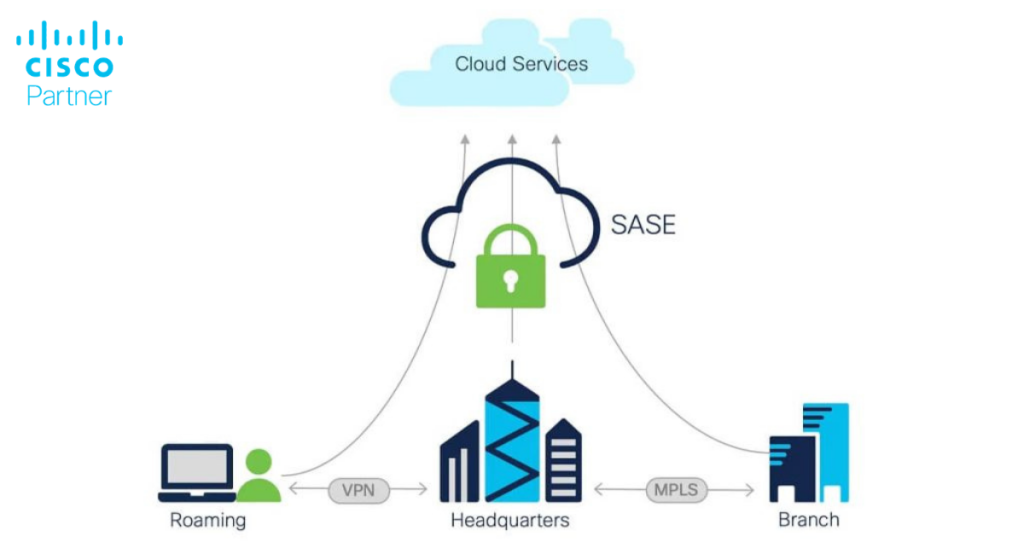
The rise of hybrid work has forced organizations to rethink how they design secure access. Users connect from offices, homes, and shared locations. Applications run across SaaS platforms, private cloud environments, and remote data centers. Traditional hub-and-spoke networks add delay and create bottlenecks for these distributed patterns. As a result, many teams seek a model that integrates networking and security into a single, cloud-delivered system. Cisco Meraki SASE supports this shift by aligning secure access, intelligent routing, and cloud-managed control. The framework provides organizations with a consistent way to protect users and applications across multiple environments.
Cisco Meraki SASE delivers cloud management, identity controls, routing intelligence, and traffic inspection in one operational platform. The Meraki cloud dashboard provides real-time insight across networks and user sessions. Meraki Secure Connect enhances this by linking traffic to cloud security layers and identity-driven access decisions. These capabilities help teams create a smooth path towards secure access for distributed work. They also simplify the operational side of SASE by combining tools that previously lived in separate systems.
Distributed work increases pressure on networks. Many organizations still rely on designs that route all traffic through a central location. This slows access to SaaS platforms and cloud-hosted applications. SASE helps resolve this by combining cloud-delivered security with direct access paths. Remote workers reach cloud resources quickly because their traffic no longer relies on outdated backhaul models. Branch sites gain more predictable performance through SD-WAN routing and intelligent traffic steering. SASE offers clear benefits for organizations that want secure access without slowing down daily operations.
Identity is a core element of SASE. Access decisions rely on user roles, device posture, application type, and context. Cisco Secure Access helps enforce these identity-driven controls. Meraki integrates with this model to ensure that only approved users and trusted devices can reach private applications or SaaS platforms. This provides stronger protection for distributed environments. It also helps organizations maintain consistency across different access methods without depending on static network boundaries.
Cisco SASE brings cloud security, identity services, analytics, SD-WAN, and access controls into one unified approach. Meraki SD-WAN forms the traffic foundation. Cisco Secure Access delivers ZTNA, secure gateways, DNS security, and cloud inspection. Operational analytics enhance visibility across remote and branch sites. Together, these capabilities create a framework that adapts to changing work patterns. It also gives organizations a way to modernize their design step by step.
Meraki SD-WAN provides the routing layer for SASE deployments. It selects optimal paths across multiple circuits, improves application performance, and maintains stable connectivity for remote and branch locations. Zero-Touch provisioning reduces deployment effort. Continuous performance monitoring helps teams resolve issues quickly. These features give Meraki SD-WAN a strong foundation for SASE traffic flows.
Meraki Secure Connect acts as the cloud security pillar within the SASE stack. It connects users, devices, and branches to cloud-delivered security services. Traffic runs through inspection engines that enforce identity, application rules, and threat controls. Remote-to-private application access, cloud application access, and branch-to-cloud workflows all benefit from this model. Meraki Secure Connect eliminates the need for separate cloud security tools, simplifying operations for many organizations.
Cloud visibility powers operational efficiency. The Meraki cloud dashboard displays traffic flows, device health, user activity, and performance metrics in one place. Teams receive quick insight when issues arise. Meraki cloud status helps administrators track service health across regions. These tools support SASE goals by giving staff a consistent operational view across remote users, offices, and cloud applications.

SASE focuses heavily on secure remote access. Cisco Secure Access provides a cloud-based entry point for remote workers. Meraki integrates with this model to ensure remote users receive identity-driven access. VPN-as-a-service, ZTNA, and secure tunnels help route traffic without granting broad network access. This model creates a more controlled experience for remote users and reduces dependency on legacy VPN designs.
Zero-trust access follows strict rules. Users reach private applications only after their identity and device posture are verified. Cisco Meraki SASE supports this through cloud connectors that evaluate each request. Users do not gain broad access to internal networks. Instead, sessions are established only for the approved applications. This helps protect sensitive workloads and limits potential breaches.
Remote users need consistent protection for SaaS and internet traffic. Cisco Meraki SASE applies secure web gateway rules, DNS-layer inspection, and cloud firewall controls to all outbound sessions. Users receive the same protections from home, branch offices, or shared workspaces. This consistency helps organizations maintain clear security baselines across many locations.
Branches depend on stable access to internal applications. Cisco Meraki SASE enables secure paths from branch sites to private environments using IPsec tunnels and cloud connectors. Traffic follows identity-driven rules and application requirements. Branch users gain fast access to internal systems without relying on outdated routing paths.
Branch sites also require stable SaaS performance and secure access to internet resources. Cisco Meraki SASE applies DNS filtering, secure gateway controls, and cloud firewall inspection. This ensures that branch traffic receives consistent protection and follows the same identity and security rules as remote users. It also keeps branches aligned with modern traffic patterns.
A unified Cisco Meraki SASE architecture simplifies branch operations. One cloud dashboard manages routing, security, identity, and monitoring. Troubleshooting becomes easier because the operational model stays unified. Branches benefit from predictable performance and less complexity.
High availability helps maintain consistent service during failures. Cisco Meraki SASE supports several HA options. Single-device HA offers redundancy within a branch. Active or standby pairs add resilience by switching control to a secondary appliance. Active or active models increase performance and introduce traffic load sharing. These options create a stable foundation for SASE traffic paths.
Equal-cost multipath routing helps Meraki SD-WAN distribute traffic across several circuits. This improves throughput and avoids congestion. ECMP also helps networks maintain stable performance during link issues. This pattern is important for SASE environments where cloud access depends on reliable traffic paths.
Global organizations need stable access across regions. Multi-Region Backhaul helps create predictable paths between branches and cloud regions. It provides a structured way to route international traffic without relying on a single region. This improves application performance and strengthens resilience for global SASE deployments.
Identity-driven controls strengthen SASE designs. Cisco Meraki SASE combines Cisco Secure Access identity services with cloud-managed policies. Users receive access based on identity, device posture, and application type. These rules limit exposure and prevent unauthorized traffic from reaching protected workloads.
Meraki Secure Connect adds cloud inspection for web, DNS, and application traffic. Outbound traffic is filtered, and application control is applied. Sessions to SaaS platforms follow consistent security rules. This helps teams protect distributed users without adding complexity to branch environments.
Visibility tools strengthen SASE by showing how users experience their applications. ThousandEyes helps monitor internet paths, SaaS performance, and endpoint connectivity. It allows teams to identify issues quickly and confirm that their SASE design works as intended.
Stratus Information Systems can help you integrate ThousandEyes into existing Meraki networks.
Organizations can take clear steps to build a practical SASE rollout. Many begin with Meraki SD-WAN to stabilize branch routing. They extend their architecture with Meraki Secure Connect to create identity-driven cloud security. Remote users adopt secure access paths through Cisco Secure Access. Private apps move into more controlled ZTNA workflows. This approach helps teams shift toward SASE without overwhelming operational resources.
Many organizations move away from traditional VPN designs in stages. They start by applying identity-driven rules to remote workers, integrate cloud inspection for SaaS apps, and adopt segmentation and identity policies for branch sites. This gradual transition helps teams modernize their environment while keeping daily operations predictable.
Cisco Meraki SASE brings together routing, identity, cloud security, and performance analytics in a single operational model. The Meraki cloud dashboard delivers visibility across all locations. Meraki Secure Connect and Cisco SASE components provide secure access from anywhere. ThousandEyes enhances visibility for remote and branch performance. These elements work together to support distributed work while maintaining strong security. Stratus Information Systems helps organizations plan, design, and deploy Cisco Meraki SASE architectures. The team supports migration planning, architecture validation, and full SASE implementation.
To speak with a Cisco Meraki specialist and evaluate your next steps, contact Stratus Information Systems.